
MotherShip(ology): The Leadership Model Hidden Within Mothering
By Rev. Dr. Aminata Njeri Author - Storefront Theologian
• Ruachologist • Pastor • Leaderologist
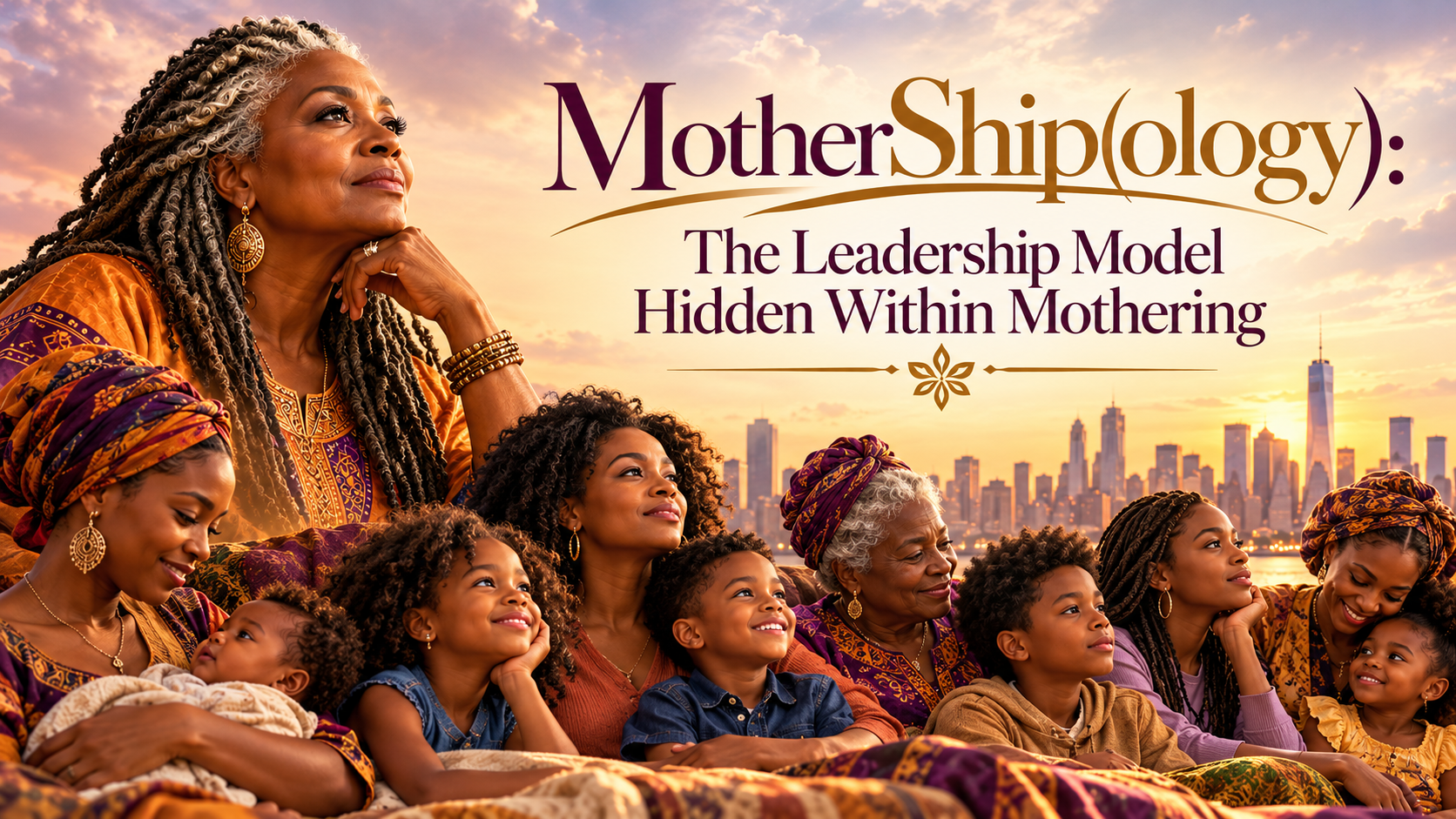
Mothering has long been described as nurturing, caregiving, supporting, and sustaining — beautiful words, but often treated as soft, secondary, or sentimental. Yet when we examine what mothering actually requires, a different truth emerges. Mothering is not simply affection. It is leadership in its earliest, most demanding, and most formative form.
Before a child ever meets a teacher, a coach, a supervisor, or a pastor, someone must assume responsibility for their survival, development, and growth. Someone must guide their judgment, shape their understanding, correct their missteps, and prepare them for increasing independence.
Traditionally, this “someone” has been a mother.
But what if we stopped treating these responsibilities as domestic tasks and started recognizing them as leadership functions?
What if mothering is not merely one expression of leadership, but the first leadership model humanity ever experienced?
And what if the principles embedded in mothering reflect a divine pattern — one rooted in Ruach haKodesh, Mother Holy Spirit?
Leadership Begins With Responsibility, Not Titles
In organizational settings, leadership is defined by responsibility:
developing others
guiding decision-making
managing resources
protecting the vulnerable
preparing people for future roles
These are the very functions mothers perform daily — often without recognition, compensation, or institutional authority.
A mother does not wait for a title to lead. She leads because life requires it.
Her leadership is not optional. It is foundational.
The First Leadership Laboratory: The Home
Long before leadership became associated with kings, priests, CEOs, or commanders, the home served as humanity’s first leadership laboratory.
In that space, mothers:
cultivate emotional intelligence
teach conflict resolution
model responsibility
establish boundaries
nurture potential
correct harmful behavior
encourage resilience
prepare children for community life
These are not small tasks. They are leadership competencies.
If an executive performed these functions, we would call it leadership development. If a teacher performed them, we would call it education. If a mentor performed them, we would call it empowerment.
So why, when a mother performs them, do we call it “just parenting”?
MotherShipology challenges this dismissal.
Mothering as Leadership Formation
Mothering is not simply care — it is formation.
A mother shapes:
how a child sees themselves
how they interpret the world
how they respond to challenges
how they treat others
how they understand responsibility
how they develop judgment
This is leadership at its most intimate and influential level.
Institutions may refine leaders. But mothers form them.
The Divine Pattern Behind Mothering
MotherShipology does not begin with sociology. It begins with theology.
If leadership is fundamentally about bringing forth life, nurturing growth, guiding development, and empowering others, then the divine model of leadership is found in Ruach haKodesh — Mother Holy Spirit.
Yeshua says:
“Except a man be born of water and of the Spirit…” (John 3:5)
Birth is maternal. Growth is maternal. Guidance is maternal. Comfort is maternal. Empowerment is maternal.
The Spirit births, nurtures, teaches, comforts, convicts, and empowers — the very functions mothers perform.
Human mothering reflects divine leadership.
MotherShipology is the study of that reflection.
Why Mothering Has Been Overlooked as Leadership
Mothering has been dismissed because leadership has been defined through masculine frameworks:
authority
hierarchy
command
control
But Genesis 1 presents a different model.
God gives dominion to them — male and female — without hierarchy, without subordination, without gendered leadership assignments.
Leadership begins as shared responsibility, not masculine privilege.
MotherShipology restores this original vision.
Mothering Is Leadership — Without Apology
Mothering is not secondary leadership. It is not soft leadership. It is not supportive leadership.
It is foundational leadership.
It is the leadership that prepares every other form of leadership to exist.
Before there was a king, there was a mother. Before there was a prophet, there was a mother. Before there was a leader, there was a mother.
MotherShipology invites us to see mothering not as domestic labor, but as the first leadership model God embedded in human life.
And perhaps the most powerful one.
Conclusion
If leadership is the responsibility to develop others, then mothering is leadership.
If leadership is the work of nurturing potential, then mothering is leadership.
If leadership is guiding judgment, shaping character, and preparing people for purpose, then mothering is leadership.
MotherShipology restores what history has overlooked:
Mothering is not simply an act of love. It is an act of leadership. And it may be the most divine leadership model we have.